Dental Bridges in Pooler, GA
A missing tooth rarely stays a simple problem. Left alone, it can shift your bite, strain neighboring teeth, and change the way you chew and speak, so the gap you notice today can turn into bigger dental work tomorrow if you continue to ignore it.
At Godley Station Dental, we help patients in Pooler and surrounding areas close these gaps with dental bridges that restore both function and confidence. Our team walks you through every option so you understand exactly what a bridge involves before you commit to treatment.
What Is a Dental Bridge?
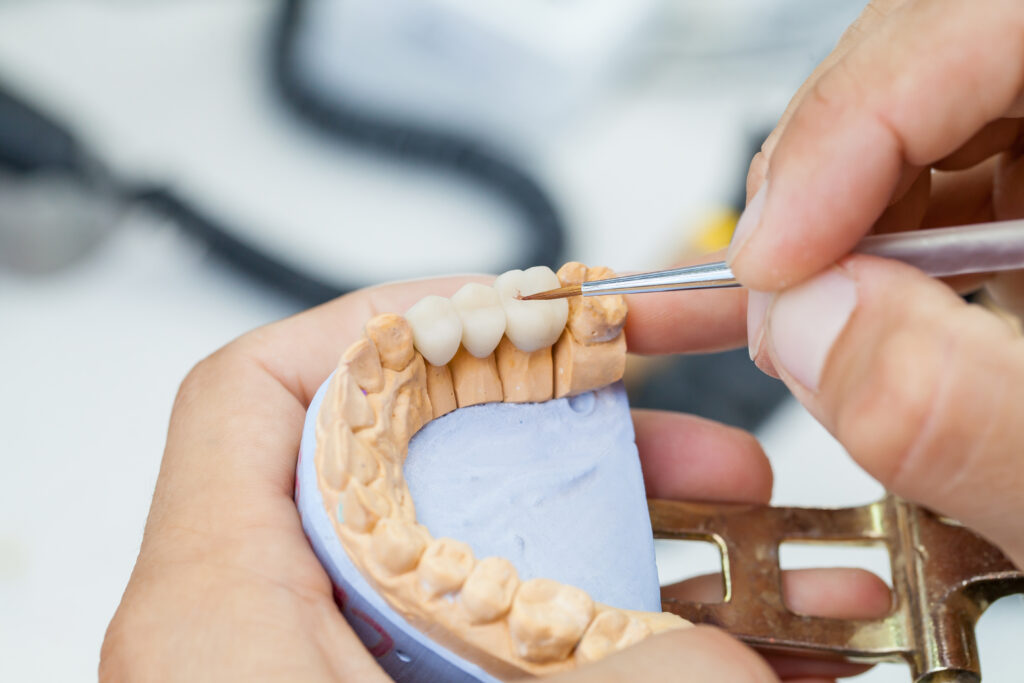
A dental bridge is a fixed prosthetic that replaces one or more missing teeth by anchoring an artificial tooth, called a pontic, between two supporting crowns. Those crowns attach to the natural teeth on either side of the gap, or in some cases to dental implants, holding the entire structure securely in place. Unlike a removable partial denture, a bridge stays fixed in your mouth and functions much like your natural teeth.
Bridges are typically made from porcelain, ceramic, or metal alloys, and modern materials are designed to blend with the color and shape of your surrounding teeth. Once placed, a bridge fills the visible gap and helps your bite distribute pressure evenly again.
When Is a Dental Bridge Recommended?
A bridge is often recommended when you have one or more missing teeth and want a permanent, non-removable solution. It is also a common option for patients who are not good candidates for dental implants, whether due to insufficient jawbone density, certain health conditions, or a preference to avoid surgery.
Beyond restoring your smile, a bridge helps prevent the surrounding teeth from drifting into the empty space, a shift that can lead to bite problems and additional tooth loss over time. It also helps you chew comfortably and speak clearly, two things that become harder the longer a gap goes untreated.
Types of Dental Bridges
Dental bridges generally fall into a few categories, and the right one depends on the number of missing teeth, the condition of the surrounding teeth, and your overall oral health.
Here are the most common types of bridges:
- Traditional bridges: These rely on a crown placed on each natural tooth adjacent to the gap, with the pontic suspended between them.
- Cantilever bridges: Anchors to a supporting tooth on only one side of the gap, which can be useful when there is only one adjacent tooth available.
- Maryland bridges: A metal or porcelain framework is bonded to the back of neighboring teeth rather than full crowns, offering a more conservative approach to the surrounding teeth.
During your consultation, we evaluate your specific case and recommend the bridge type best suited to your smile.
The Dental Bridge Process
Getting a bridge at Godley Station Dental typically takes two visits. During the first visit, we prepare the adjacent teeth by reshaping them to accommodate the supporting crowns, then take detailed impressions that guide the fabrication of your custom bridge. A temporary bridge protects the area while your permanent restoration is crafted.
At the second visit, we check the fit, color, and bite of your new bridge before securing it permanently in place. Most patients find the process comfortable and simpler than they thought, with many returning to their normal routine the same day.
How Long Does a Dental Bridge Last?
With proper care, a dental bridge can last many years. Research published by the Canadian Agency for Drugs and Technologies in Health found that the estimated 5-year survival rate for dental bridges ranges from about 89% to 91%, while the estimated 10-year survival rate falls between 79% and 82%. Consistent brushing, flossing, and regular checkups all play a role in how long your bridge holds up.
Because a bridge relies on the health of the surrounding teeth, keeping those supporting teeth free of decay and gum disease is essential to protecting your investment.
Bridges vs. Dental Implants
Bridges and dental implants both replace missing teeth, but they take different paths to get there. A bridge is generally faster to complete and comes with a lower upfront cost, as it does not require surgery or a healing period. An implant, on the other hand, involves a longer process but stands independently in the jawbone without relying on neighboring teeth for support.
The right choice depends on your oral health, budget, and long-term goals, and we’re happy to walk you through the tradeoffs during a consultation.

Choose Godley Station Dental for Your Dental Bridge
What Our Patients Are Saying
Our Location
We are conveniently located in Pooler, Georgia, just minutes from Savannah!
Godley Station Professional Park
1000 Towne Center Blvd
Suite #101
Pooler, GA 31322
Our Hours
| Monday | 7:30am-5pm |
| Tuesday | 7:30am-5pm |
| Wednesday | 7:30am-5pm |
| Thursday | 7:30am-5pm |
| Friday | 7:30am-4pm |