
Medically Reviewed by Dr. Matthew Allen, DDS on July 28, 2026
A full mouth reconstruction is a comprehensive, customized treatment plan that rebuilds every tooth in your mouth using a coordinated combination of restorative and, when appropriate, cosmetic dental procedures. Good candidates typically have widespread tooth decay, advanced gum disease, significant tooth loss or trauma, or a bite that has become unstable from years of teeth grinding. When multiple dental problems compound over time, they can leave you struggling to eat comfortably, speak confidently, or smile without hesitation, which is exactly the combination of concerns full mouth reconstruction is designed to address.
At Godley Station Dental, our team of five doctors, twelve hygienists, and eleven assistants has spent more than two decades helping Pooler-area patients rebuild their smiles with personalized, modern care. As a three-time Best of Georgia award winner, placing among the top ten businesses statewide, we approach every comprehensive dental service with the same patient-centered philosophy Dr. Matthew Allen established when he opened our doors in the early 2000s.
What Is a Full Mouth Reconstruction?
A full mouth reconstruction, sometimes called full mouth rehabilitation or full mouth restoration, is not a single procedure. It is a carefully coordinated treatment plan combining multiple restorative and, when appropriate, cosmetic procedures to address every tooth in the mouth. The primary goal is to restore proper function, eliminate active disease, correct structural damage, and deliver a smile you can be confident in again.
Unlike a smile makeover, which focuses primarily on aesthetics, full mouth reconstruction prioritizes health and function first, with cosmetic improvements often achieved as part of the process. If your main concern is appearance rather than function, a smile makeover alone may be the more appropriate starting point, and our team can help you determine which path fits your goals during a consultation.
The specific procedures involved depend entirely on the current condition of your teeth and gums. Some patients need dental implants, bridges, or dentures to replace missing teeth, while others require crowns, root canal therapy, or periodontal treatment to address underlying gum disease before any restorative work can begin. A thorough examination, often including digital x-rays and a bite analysis, helps determine which combination of treatments can deliver the most stable, long-lasting outcome for each patient.
Who Is a Good Candidate for Full Mouth Reconstruction?
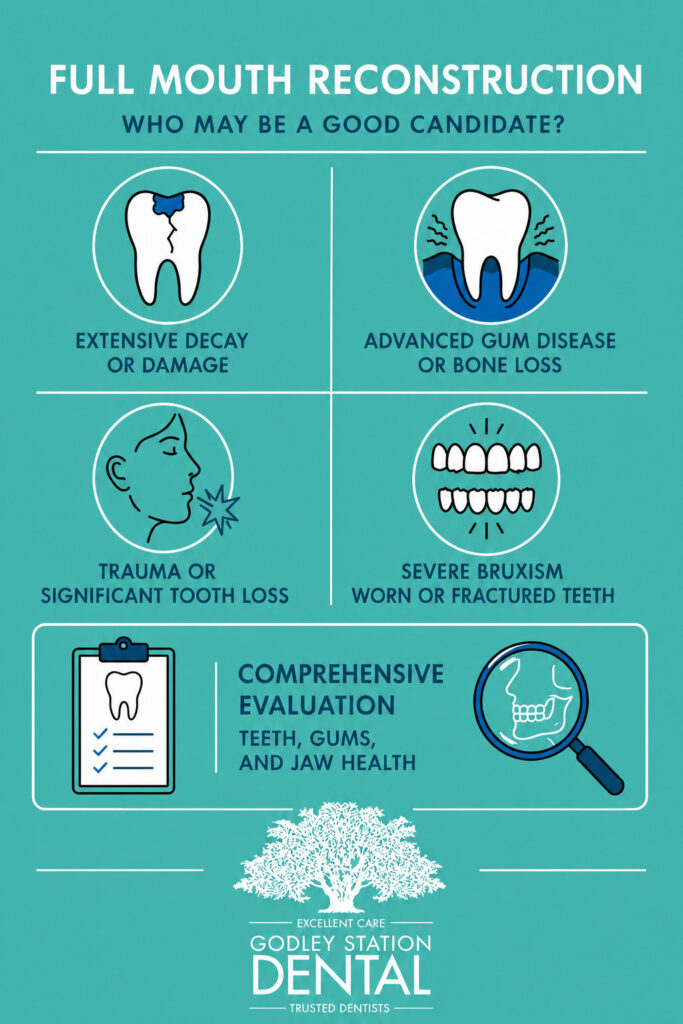
Candidacy is determined through a comprehensive evaluation accounting for the overall health of your teeth, gums, and jaw. While every case is unique, several common situations often lead patients to explore this level of care.
Extensive Tooth Decay or Damage
Patients who have experienced significant decay affecting most or all of their teeth often benefit from a full reconstruction plan rather than isolated repairs. When damage is widespread, addressing each tooth separately may not produce stable long-term results or restore proper bite function.
Advanced Gum Disease
According to the National Institute of Dental and Craniofacial Research, gum disease affects nearly half of adults aged 45 to 64 in the United States, and the agency links the condition to a wide range of other health concerns beyond the mouth. When gum disease progresses to advanced stages, it causes bone loss and tooth loss that require full reconstructive care before any new restorations can succeed. Treating active gum disease is always the first phase of a reconstruction plan, since restorations placed over infected or unstable gum tissue are unlikely to last.
Trauma, Tooth Loss, or Congenital Conditions
Accidents, sports injuries, and other traumatic events can cause sudden, widespread damage to teeth, gums, and jaw structures. Full mouth reconstruction creates a comprehensive plan to restore form and function across all affected areas, rather than treating each issue as an isolated problem. Some patients also arrive at full mouth reconstruction because of congenital dental conditions that affect the number, size, or structure of their teeth from birth. In these cases, a coordinated, multi-procedure approach is often the most effective way to achieve a functional, healthy bite.
Severe Bruxism and Bite Problems
Chronic teeth grinding places enormous stress on teeth over time, leading to worn surfaces, fractures, and bite instability. Patients with significant structural wear from bruxism may need reconstructive treatment to rebuild lost tooth structure and create a stable, functional bite. In more advanced cases, years of wear can gradually reduce the vertical space between the upper and lower jaw, causing the bite to close further than it should and placing extra strain on the front teeth. Reconstruction can help restore that lost vertical dimension along with a healthier, more even distribution of bite force. A consultation is the only way to confirm whether reconstruction is the right fit for your specific situation.
What Treatments Are Included?
The procedures in a full mouth reconstruction plan vary by patient, but commonly include a combination of the following:
- Dental crowns to restore damaged or broken teeth
- Dental implants, bridges, or dentures to replace missing teeth
- Root canal therapy to save and preserve infected teeth
- Periodontal treatment to eliminate active gum disease before restoration
- Cosmetic dentistry procedures, such as veneers or bonding, to refine the final appearance
Treatment is completed in carefully planned phases, beginning with any active infection or disease before advancing into restorations. This structured approach ensures every step builds on a healthy, stable foundation, which is what makes reconstruction results last. Because every treatment plan is different, no two full mouth reconstructions look exactly alike, and your dentist will walk you through each phase in detail so you understand what to expect before any treatment begins.
Benefits of Full Mouth Reconstruction
A successful full mouth reconstruction can meaningfully improve daily comfort and confidence. Restoring damaged, missing, or worn teeth can make chewing and speaking more comfortable, help protect the teeth and gums that remain, and give you a smile you feel good about sharing.
Because the plan addresses the underlying causes of dental problems rather than masking symptoms, the results are often more stable over time than isolated repairs. Many patients also find that combining restorative work with cosmetic refinements, such as porcelain veneers or professional teeth whitening, allows them to address function and appearance in a single coordinated plan rather than returning for separate treatments down the road.
What to Expect During the Full Mouth Reconstruction Process
Every full mouth reconstruction begins with a comprehensive consultation and examination, which typically includes digital x-rays, a review of your bite, and an assessment of your gum health. From there, your dentist builds a phased treatment plan that addresses any active disease first, followed by the restorative and cosmetic procedures needed to rebuild your smile.
Because these plans often involve several procedures across multiple visits, we build every treatment schedule around your goals, your budget, and your daily life, so you always know what to expect before moving to the next phase.
Rebuild Your Smile at Godley Station Dental
We have earned our reputation as a leading Pooler practice through more than two decades of modern, patient-focused care built on the core belief that an exceptional experience keeps patients coming back. Our restorative and general dentistry teams collaborate to develop individualized treatment plans aligned with each patient’s health goals and budget. Flexible financing through Cherry, Sunbit, and CareCredit, along with our dental savings plan, helps make comprehensive care more accessible.
If you are ready to take the first step toward a healthier, fully restored smile, schedule your consultation with our team today.
Frequently Asked Questions About Full Mouth Reconstruction
What Is the Difference Between a Full Mouth Reconstruction and a Smile Makeover?
A full mouth reconstruction focuses on health and function first, addressing problems such as active gum disease, structural damage, and bite instability, with cosmetic improvements included as part of the process. A smile makeover is typically chosen by patients who are already in good oral health and want to improve the appearance of teeth that are otherwise structurally sound. Your dentist can help you determine which approach fits your current needs during a consultation.
How Long Does a Full Mouth Reconstruction Take to Complete?
Treatment length varies widely depending on how many procedures are needed and how your mouth responds to each phase. A plan that involves treating active gum disease before restorative work, for example, generally takes longer than one focused mainly on crowns or veneers. Your dentist can give you a more specific timeline once your evaluation is complete and your treatment plan is finalized.
Is a Full Mouth Reconstruction Painful?
Most procedures included in a full mouth reconstruction, such as crowns, implants, and root canal therapy, are performed using local anesthesia to keep you comfortable throughout treatment. Many practices also offer sedation options for patients who feel anxious about longer appointments. Mild soreness after certain procedures is common and typically manageable with over-the-counter pain relief or guidance from your dental team.
Does Dental Insurance Cover Full Mouth Reconstruction?
Coverage depends on your specific insurance plan and which procedures are included in your treatment plan, since some components, such as periodontal treatment or dental implants, may be covered differently than others. Our team can help you review your benefits and explore financing options, including flexible payment plans, to help make treatment more manageable regardless of your coverage.
Can a Full Mouth Reconstruction Fix Bite Problems Caused by Teeth Grinding?
Yes, in many cases. Chronic teeth grinding can wear down tooth structure and gradually shift your bite out of its proper position over time. A full mouth reconstruction can rebuild worn teeth and help restore a more stable, balanced bite, though your dentist may also recommend a nightguard or other protective measures to help prevent future wear.
About the Author
Founder, Godley Station Dental
Dr. Matthew Allen earned his DDS from Ohio State University after completing a BS in biology at the University of Toledo. He founded Godley Station Dental in 2004 with a commitment to personalized, patient-centered dental care, and today leads a team of five doctors, twelve hygienists, and eleven assistants serving the Pooler, Georgia community.